
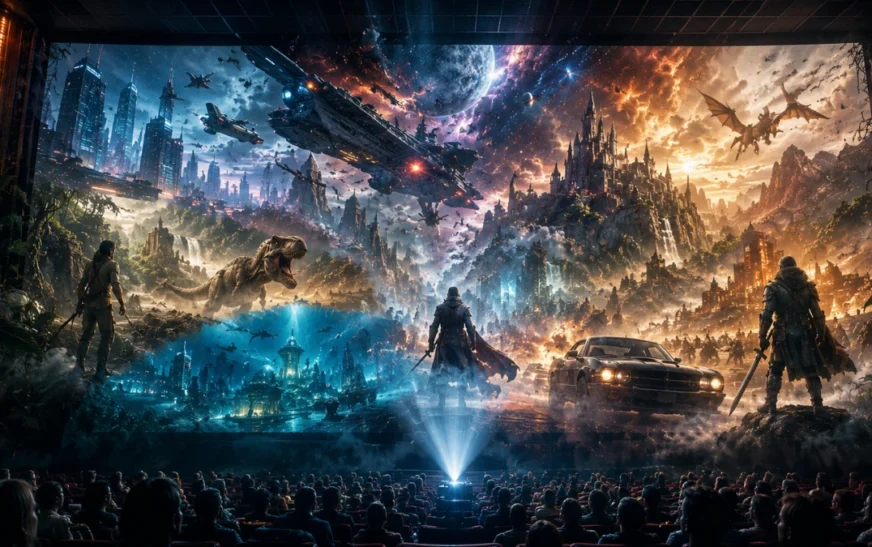
Movies can be fun for one night. But a great franchise stays with us for years, even for life. We remember the heroes, the villains, the music, the lines, and those big moments that made us cheer in our seats. That is what makes the best movie franchises so special. They are not just films. They become part of our memories.
Some franchises gave us magic. Some gave us action. Some gave us huge worlds that felt real enough to visit. Others kept going for decades and still found ways to surprise us. I think that is the real joy of a franchise. You do not just watch one story and move on. You come back again and again because the world feels familiar, exciting, and full of life.
In this article, we will look at some of the best movie franchises of all time, including Star Wars, Marvel, Harry Potter, and James Bond. We will talk about what made them work, why people love them so much, and how they changed film history. We will also explore their cultural impact, their staying power, and the reasons fans keep returning. At the end, you will find a detailed FAQ on sequels, franchise length, and what helps a movie series last.
What Makes a Movie Franchise Great?
Not every successful movie becomes a great franchise. A franchise needs more than one hit film. It needs a reason for people to care over time.
The best ones usually have a few things in common. First, they give us iconic characters we never forget. Think of Darth Vader, Harry Potter, Iron Man, or James Bond. These are not just names. They are symbols in pop culture.
Second, a great franchise builds a world people want to revisit. That could be a school of magic, a galaxy far away, or a spy-filled world of danger and style. When the setting is strong, each new film feels like a return to somewhere exciting.
Third, strong franchises often show real box office success. Money is not everything, of course, but it does matter. Big ticket sales show that millions of viewers care enough to show up, again and again.
Finally, a franchise needs to change with time. Audiences grow. Trends shift. Technology improves. The best series know how to stay fresh while keeping the heart of what people loved in the first place.
Star Wars: The Space Saga That Changed Everything
When Star Wars first arrived in 1977, it felt new, bold, and magical. It mixed science fiction, fantasy, adventure, and heart in a way that had never been seen like that before. Even now, it is hard to overstate how huge its impact has been.
At the center of Star Wars is a simple but powerful story. Good versus evil. Hope versus fear. Family, destiny, and redemption. These themes are easy to understand, and that helped people of all ages connect with the films.
The franchise also gave us some of the most iconic characters in movie history. Luke Skywalker, Princess Leia, Han Solo, Yoda, and Darth Vader are known almost everywhere in the world. You do not even need to be a huge fan to recognize them. That kind of reach is rare.
Another reason Star Wars stands tall is its world-building. The planets, costumes, creatures, ships, and lightsabers created a full cinematic universe that felt alive. Fans did not just watch the films. They wanted to live in that galaxy, talk about it, dress like it, and pass it on to the next generation.
Of course, Star Wars has had highs and lows. Some films are loved more than others. Fans often argue about the prequels, sequels, and spin-offs. But that is also part of what makes it important. People care deeply. Few franchises inspire that level of passion.
Its box office success has also been huge over many decades. From the original trilogy to newer releases, Star Wars has remained a major event. It also changed merchandising forever, proving that a film franchise could become much bigger than the movies alone.
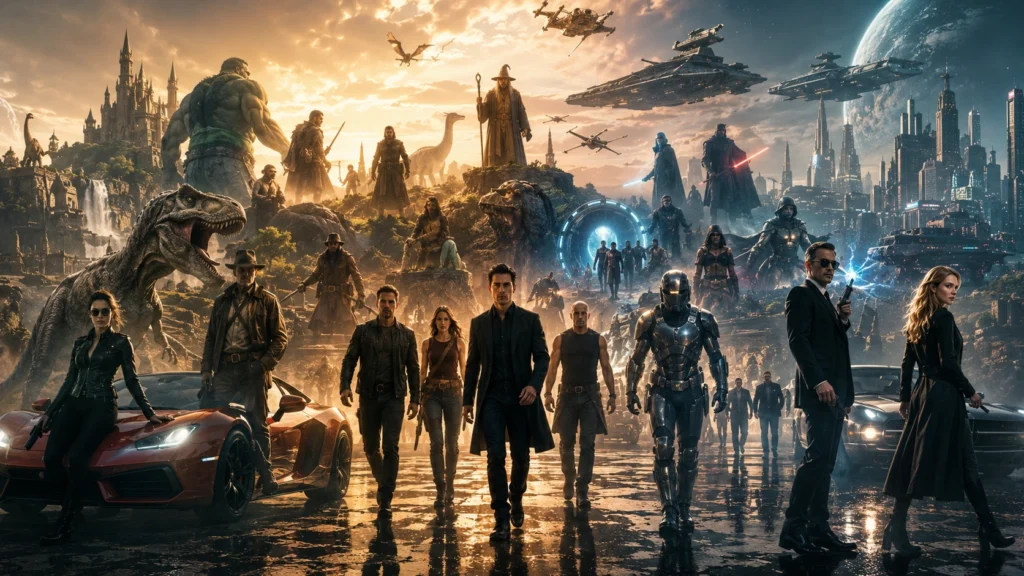
Marvel: The Superhero Giant
If you want to talk about modern franchise power, Marvel has to be near the top. What makes Marvel stand out is not just the number of films. It is how those films connect. Marvel turned superhero stories into a shared cinematic universe on a scale no one had seen before.
It started carefully with movies like Iron Man in 2008. That film introduced Tony Stark in a smart, funny, and exciting way. Then Marvel built outward, adding Captain America, Thor, Black Widow, Hulk, and many more. Step by step, movie by movie, it created a giant story made of smaller stories.
This approach changed Hollywood. Suddenly, studios were not just making sequels. They were building connected worlds. Marvel showed that if the plan was clear and the characters were strong, audiences would follow along.
And the characters really were the key. Marvel gave viewers many iconic characters, but it also made them feel human. Tony Stark was brilliant but flawed. Steve Rogers was noble but often lonely. Peter Parker felt young, awkward, and real. That mix of power and personality helped people connect.
Marvel also enjoyed unmatched box office success for many years. Big crossover films like The Avengers, Infinity War, and Endgame became worldwide events. People did not just watch them. They planned for them, talked about them for months, and packed theaters on opening weekend.
One thing I find impressive is how Marvel made long storytelling feel fun instead of tiring. That is not easy. With so many films, it could have become confusing or dull. Instead, it kept fans interested by balancing action, humor, emotion, and surprise.
Even now, when some viewers feel superhero fatigue, Marvel’s influence is impossible to ignore. It changed how studios think, how stories connect, and how franchises grow.
Harry Potter: Magic, Friendship, and Growing Up
There is something deeply special about Harry Potter. For many people, it was more than a series of films. It felt like growing up with friends. From the first trip to Hogwarts to the final battle, the franchise gave audiences a magical world that felt both huge and personal.
One of the biggest strengths of Harry Potter is its emotional journey. The characters begin as children and grow into adults. Their fears become deeper. Their choices matter more. That gave the series a strong feeling of progress that many franchises struggle to create.
The world itself is another reason fans love it. Hogwarts, Diagon Alley, Quidditch, magical creatures, and hidden rules of wizard life all helped form a rich cinematic universe. It felt detailed without becoming too hard to follow. That balance matters, especially for younger viewers.
The films also gave us unforgettable friendships. Harry, Hermione, and Ron became one of the most beloved trios in movie history. Alongside them were villains, mentors, rivals, and teachers who made the world feel full. These iconic characters gave the franchise its heart.
In terms of box office success, the series was a giant winner. Each new release became a major event. Fans lined up for midnight screenings, wore costumes, and debated every change from the books. That kind of excitement is a sign of a franchise that means something real to people.
What I think Harry Potter did so well was blend wonder with pain. It had humor and joy, but it also dealt with loss, fear, loyalty, and courage. That gave it emotional weight. Viewers were not just there for spells. They cared about the people casting them.
Even years after the final main film, the franchise remains strong in pop culture. That says a lot.
James Bond: The Franchise That Never Dies
James Bond is one of the oldest and most durable franchises in movie history. That alone is amazing. Since Dr. No in 1962, Bond has remained a global symbol of style, danger, charm, and action.
What makes Bond so interesting is how often he changes while still feeling familiar. Different actors have played the role in very different ways. Sean Connery brought cool confidence. Roger Moore added lighter fun. Pierce Brosnan mixed class with action. Daniel Craig brought grit and emotion. Yet Bond stayed Bond.
This ability to evolve is a huge part of the franchise’s longevity. Bond films reflect the time they are made in. The gadgets, villains, politics, and action style often shift with the world around them. That has helped the series survive across generations.
Bond also has one of the strongest sets of iconic characters around the lead. M, Q, Miss Moneypenny, and a long line of memorable villains and Bond girls all help shape the series. Even the opening music and title scenes feel like part of the identity.
Its box office success has lasted for decades, which is very rare. Some entries perform better than others, but Bond keeps coming back. Skyfall in particular showed that an older franchise could still feel big, modern, and exciting.
There is also something simple and powerful at the core of Bond. You know what kind of ride you are getting. There will be suspense, action, style, travel, and danger. That clear identity helps a lot. Audiences like surprise, yes, but they also like knowing a franchise will deliver a certain kind of fun.
The Lord of the Rings: Epic Storytelling at Its Best
Few franchises feel as grand as The Lord of the Rings. Peter Jackson’s trilogy brought fantasy to the big screen in a way that felt serious, emotional, and breathtaking. It did not treat the audience like children. It trusted them to care about a big story told with depth.
The scale of the films is one reason they stand out. The landscapes are beautiful, the battles are huge, and the stakes feel enormous. But what really makes the trilogy great is its emotional center. At heart, it is about friendship, sacrifice, courage, and hope.
Frodo, Sam, Gandalf, Aragorn, and Gollum are powerful examples of characters who stay with viewers long after the credits roll. Their struggles feel real, even in a fantasy world. That is one reason the films continue to matter.
The franchise also earned major respect from critics and awards groups, not just fans. That matters because fantasy was once seen as less serious by many people in film circles. The Lord of the Rings helped change that.
It may not be as large as Marvel or Bond in number of films, but its quality and impact are enormous. Sometimes a franchise does not need endless entries. Sometimes a near-perfect run is enough.
Fast & Furious: Pure Entertainment and Global Appeal
Not every great franchise needs deep mythology or awards. Sometimes people just want excitement, energy, and a wild good time. That is where Fast & Furious shines.
What began as a street racing series became something much bigger. Over time, it turned into a globe-trotting action saga built on speed, stunts, family, and over-the-top fun. The change could have failed, but somehow it worked.
A big reason is its cast. Dominic Toretto, Brian O’Conner, Letty, Roman, and Hobbs became familiar faces people enjoyed seeing again. The films also leaned hard into emotion, especially around the idea of loyalty and chosen family. That gave the action a human side.
The franchise has shown massive box office success around the world. It may not always get the same praise as more serious films, but audiences clearly love it. And honestly, there is something refreshing about a franchise that knows exactly what it is and goes all in.
Why These Franchises Last
When you look at all these series together, a pattern starts to show. The best franchises do not survive by luck alone.
They create worlds that feel larger than a single film. They give us heroes and villains we remember. They balance familiar elements with new ideas. Most of all, they make people feel something. Excitement matters, but emotion matters even more.
A strong franchise becomes part of culture. People quote it. Dress like it. Share it with friends and family. They return to it during different stages of life. That is when a movie series becomes more than entertainment.
Some franchises last because they innovate. Others last because they comfort us with something familiar. The rarest ones do both.
Final Thoughts
The best movie franchises of all time earned their place by doing more than making money. They created memories. They shaped pop culture. They gave us adventure, wonder, laughter, and heartbreak.
Star Wars changed blockbuster filmmaking. Marvel redefined connected storytelling. Harry Potter made magic feel personal. James Bond proved a franchise can survive for generations. The Lord of the Rings showed fantasy could be epic and emotional. Fast & Furious reminded us how powerful pure entertainment can be.
If you ask ten people for their favorite franchise, you may get ten different answers. That is part of the fun. But the series above have one thing in common: they left a mark that is hard to erase.
And really, that is the sign of a great franchise. Long after the theater lights come on, part of the story stays with you.
FAQs About Movie Franchises
A movie franchise is a group of related films built around the same story world, characters, theme, or brand. It often includes sequels, prequels, spin-offs, and sometimes TV shows or games.
A successful franchise usually has strong characters, a clear identity, a world people enjoy visiting, and stories that keep viewers interested. Good timing, smart marketing, and loyal fans also help.
Some sequels fail because they repeat the same ideas, rush the story, or lose what made the first film special. Weak writing, poor casting choices, and too much studio control can also hurt a sequel.
A franchise can last for many years, even decades, if it adapts well. James Bond is a great example. The key is knowing how to update the series without losing its core appeal.
Not always. Money shows popularity, but it does not tell the whole story. A franchise can have huge sales and little long-term meaning, or smaller sales and deep cultural value. The best franchises often have both.
Connected worlds make stories feel bigger and more exciting. Fans enjoy spotting links between films, following character arcs over time, and feeling that each movie is part of something larger.
A sequel continues the main story after an earlier film. A spin-off takes a side character, event, or part of the world and builds a new story around it
Yes, but it is hard. Long-running franchises need fresh ideas, strong leadership, and respect for what fans love. If they become lazy or confusing, quality often drops.
People return for characters they care about. A great plot matters, but memorable heroes and villains are often the real reason fans stay loyal over many films.
Franchises will likely remain a huge part of Hollywood. But audiences are becoming more selective. In the future, the strongest franchises will be the ones that mix spectacle with real heart, clear storytelling, and something fresh to say.