
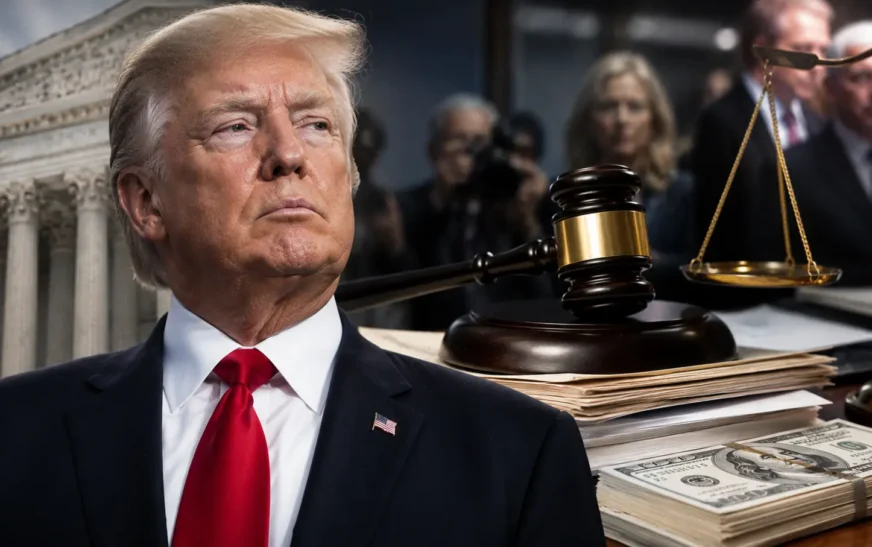
When Trump appeals sexual abuse and defamation judgment headlines return to the news, people pay attention. And that’s exactly what happened again in July 2026. A years-long fight finally reached a turning point, yet the story isn’t fully over.
Here’s the short version. A jury ruled against Donald Trump. He fought it. The nation’s top court said no. Then he paid.
But even after the money changed hands, Trump kept pushing back. So let’s unpack what all of this means, step by step.
The Case That Started It All
To understand the latest twist, you have to go back a few years.
In 2019, writer E. Jean Carroll went public with a serious claim. She said Trump sexually assaulted her in a Manhattan department store dressing room back in 1996. He denied it. He said he’d never met her and called her a liar.
So she filed a civil lawsuit. Not a criminal case, but a lawsuit seeking accountability and damages.
The trial played out in a federal court in New York. In 2023, a nine-person jury reached a unanimous decision. They found Trump liable for sexually abusing Carroll and for defaming her afterward. The panel awarded her $5 million.
That sexual abuse verdict made major political news across the country. It marked a rare moment. A sitting political figure of Trump’s stature had been held responsible in open court.
The Trump sexual abuse case then moved into a long appeals phase. And that’s where things dragged on for quite a while.
Inside the E. Jean Carroll Judgment
The E. Jean Carroll judgment wasn’t just symbolic. It carried real financial weight and real legal force.
Carroll’s team argued the evidence was strong. During trial, other women testified about similar experiences with Trump. Jurors also heard the 2005 “Access Hollywood” tape, in which Trump bragged about grabbing women.
Trump’s lawyers later said that evidence shouldn’t have been allowed. They believed it unfairly swayed the jury. That argument became the heart of his legal appeal.
Still, the court judgment stood firm. The U.S. Court of Appeals for the 2nd Circuit reviewed the case and upheld the verdict. That was a big blow to Trump’s side.
For Carroll, the E. Jean Carroll judgment offered a measure of justice. For Trump, it set the stage for a fight that would climb all the way to the highest court in the land.
Why the Supreme Court Refused to Step In
After losing at the appeals level, Trump had one last option. He took his case to the U.S. Supreme Court.
He asked the justices to review the sexual abuse verdict. His main complaint stayed the same. He argued the trial included evidence that never should have reached the jury.
The court took its time. Really, a lot of time. The petition (docket No. 25-573) got rescheduled more than a dozen times before the justices finally discussed it.
Then, on June 29, 2026, they gave their answer. They declined to hear the appeal. No justice noted a dissent. In plain terms, the U.S. Supreme Court let the lower ruling stand.
That decision mattered enormously. When the Supreme Court refuses a case, the earlier ruling becomes final. There’s usually nowhere else to go.
So the moment Trump appeals sexual abuse and defamation judgment efforts hit that wall, the outcome was basically sealed. The U.S. legal system had spoken through every level available.
Judge Lewis Kaplan Orders the Payment
Once the top court stepped aside, the case returned to the trial judge.
Judge Lewis Kaplan had overseen the matter for years. He knew every detail. With the appeals exhausted, he ordered Trump to pay what he owed.
The order didn’t wait long. Judge Lewis Kaplan cleared the way for the funds to be released to Carroll and her legal team. Court records confirmed the transfer soon after.
This is how the U.S. legal system works in practice. A jury decides, appeals courts review, and eventually a judge enforces the result. Judge Lewis Kaplan simply carried out that final step.
For anyone following Trump legal news, this was the moment the case shifted from argument to action. The debate was over. Payment was due.
The $5.6 Million Payment Finally Lands
On July 14, 2026, the money moved.
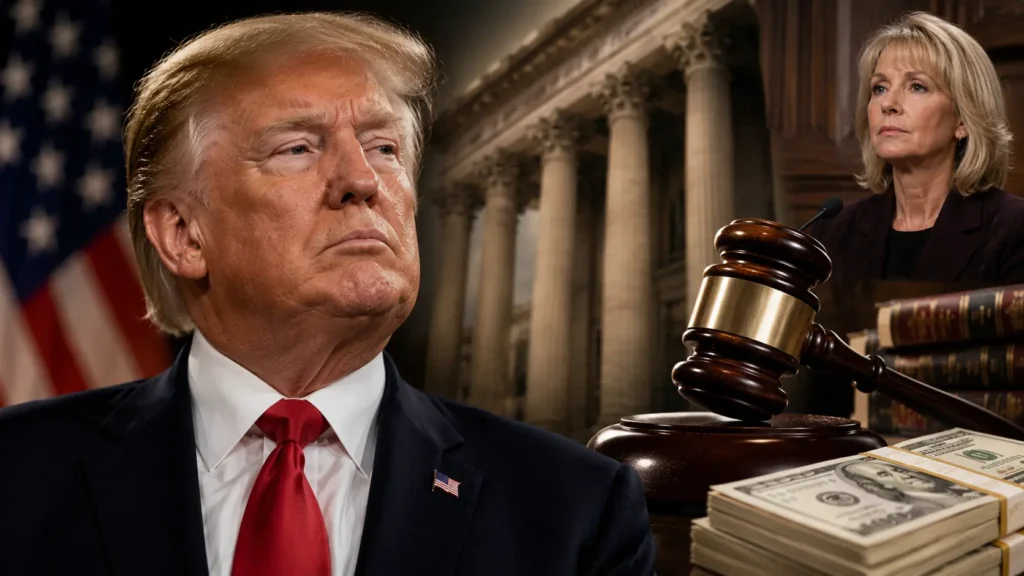
Carroll received roughly $5.625 million. That figure includes the original $5 million award plus three years of accumulated interest. Delays add up, and interest kept climbing the whole time Trump fought the ruling.
Her attorney, Roberta Kaplan, confirmed the news. She noted that a unanimous jury had found Trump liable three years earlier. Now, at last, Carroll had received the damages that verdict promised.
The Trump $5.6 million payment closed one chapter of a very public battle. Think about that timeline. A 2023 verdict. Years of appeals. A Supreme Court refusal. And only then, a check.
That’s a long road for any civil lawsuit. It shows how slowly high-profile cases can move through the courts.
Yet the Trump $5.6 million payment didn’t end the drama. Not quite. Because even after paying, Trump wasn’t finished trying.
Trump Keeps Fighting Even After Paying
Here’s where the story takes an unusual turn.
Just before the payment, Trump made one more move. On July 8, 2026, his lawyers filed a petition for rehearing at the Supreme Court. An earlier version had been rejected on July 6 over a formatting issue, then resubmitted two days later.
A rehearing petition asks the court to reconsider its own decision. These requests rarely succeed. Courts almost never reverse themselves, especially after a clean denial.
Even so, the filing signals intent. Trump doesn’t want this Trump defamation case to simply fade away. He’s still contesting it, even after the funds cleared.
That persistence keeps generating Trump legal news week after week. And it hints at his broader strategy across every case he faces.
There’s also a bigger financial threat looming. A separate defamation lawsuit ended with an $83 million judgment against Trump. That defamation lawsuit is still under appeal. Federal courts have upheld it so far, but the fight continues.
So while the $5.6 million matter feels settled, the larger war between these two isn’t over yet.
What This Means for the Bigger Picture
Step back, and this case tells us something about accountability.
The U.S. legal system moved slowly here. Painfully slowly, some would argue. But it moved. Every court, from the trial level to the U.S. Supreme Court, reviewed the claims and reached the same place.
That consistency matters. When a court judgment survives that many challenges, it gains real credibility. The system tested it and held.
For Donald Trump, the loss adds to a growing list of legal setbacks. His approach stays familiar, though. Fight hard, appeal everything, and never publicly concede. That pattern shapes much of the political news surrounding him.
For E. Jean Carroll, the result brought long-delayed closure on this piece. She waited years. She endured public attacks. And in the end, the courts sided with her at every turn.
The wider takeaway is simple. A civil lawsuit can hold powerful people accountable, even when the process takes forever. That’s a meaningful lesson about the U.S. legal system, whatever your politics.
Meanwhile, the ongoing appeals remind us that these battles rarely end cleanly. One payment closes a door. Another case keeps a different door wide open.
Conclusion
The saga of how Trump appeals sexual abuse and defamation judgment rulings played out offers a clear window into American courts. A jury found him liable. Appeals courts agreed. The U.S. Supreme Court declined to intervene. Then Judge Lewis Kaplan ordered payment, and Carroll finally collected $5.625 million.
Yet Trump refused to fully walk away. His rehearing petition, filed even after the money moved, shows he’s not done. And with the separate $83 million defamation lawsuit still on appeal, more chapters likely lie ahead.
For now, one thing stands firm. The E. Jean Carroll judgment held up under every possible challenge. That outcome speaks volumes about persistence, accountability, and the slow but steady grind of the U.S. legal system.
Frequently Asked Questions
In 2023, a federal jury found Donald Trump liable for sexually abusing E. Jean Carroll in 1996 and defaming her afterward. It awarded her $5 million. Appeals courts upheld the sexual abuse verdict, and the U.S. Supreme Court declined to hear Trump’s appeal in June 2026.
Trump has argued throughout the Trump defamation case that the trial wrongly allowed certain evidence, including testimony from other women. Through his continued legal appeal, he hopes courts might overturn the ruling. If that ever happened, he could seek to recover the Trump $5.6 million payment.
Trump files emergency request against E. Jean Carroll headlines stem from his aggressive legal moves. His most recent step was a rehearing petition at the U.S. Supreme Court on July 8, 2026, asking the justices to reconsider their denial. Such requests almost never succeed
In theory, Trump asks court to recover $5.6 million judgment only if a higher ruling reverses the outcome. Since the U.S. Supreme Court already denied review and Judge Lewis Kaplan enforced the court judgment, reversing this now is extremely unlikely.
Not entirely. The $5.6 million matter is essentially resolved after the payment. However, a separate defamation lawsuit ended with an $83 million judgment that Trump is still appealing in federal court. That part of the dispute remains active.